Yusleep ReviewIs YuSleep Safe for Older Adults? Age-Related Considerations and What to Check First
Is YuSleep Safe for Older Adults? Age-Related Considerations and What to Check First

The short answer
YuSleep is a sleep supplement, and the published information does not establish how it affects adults over a typical adult range specifically. Older adults often process supplements more slowly, may take several medicines that interact with sleep aids, and face higher fall risk from grogginess. Before using it, check the label for age limits and warnings, review your medications with a doctor or pharmacist, and talk to a clinician about the underlying sleep problem.
Some links on this site are affiliate links: if you buy through one, the site may earn a commission at no extra cost to you. More about this.
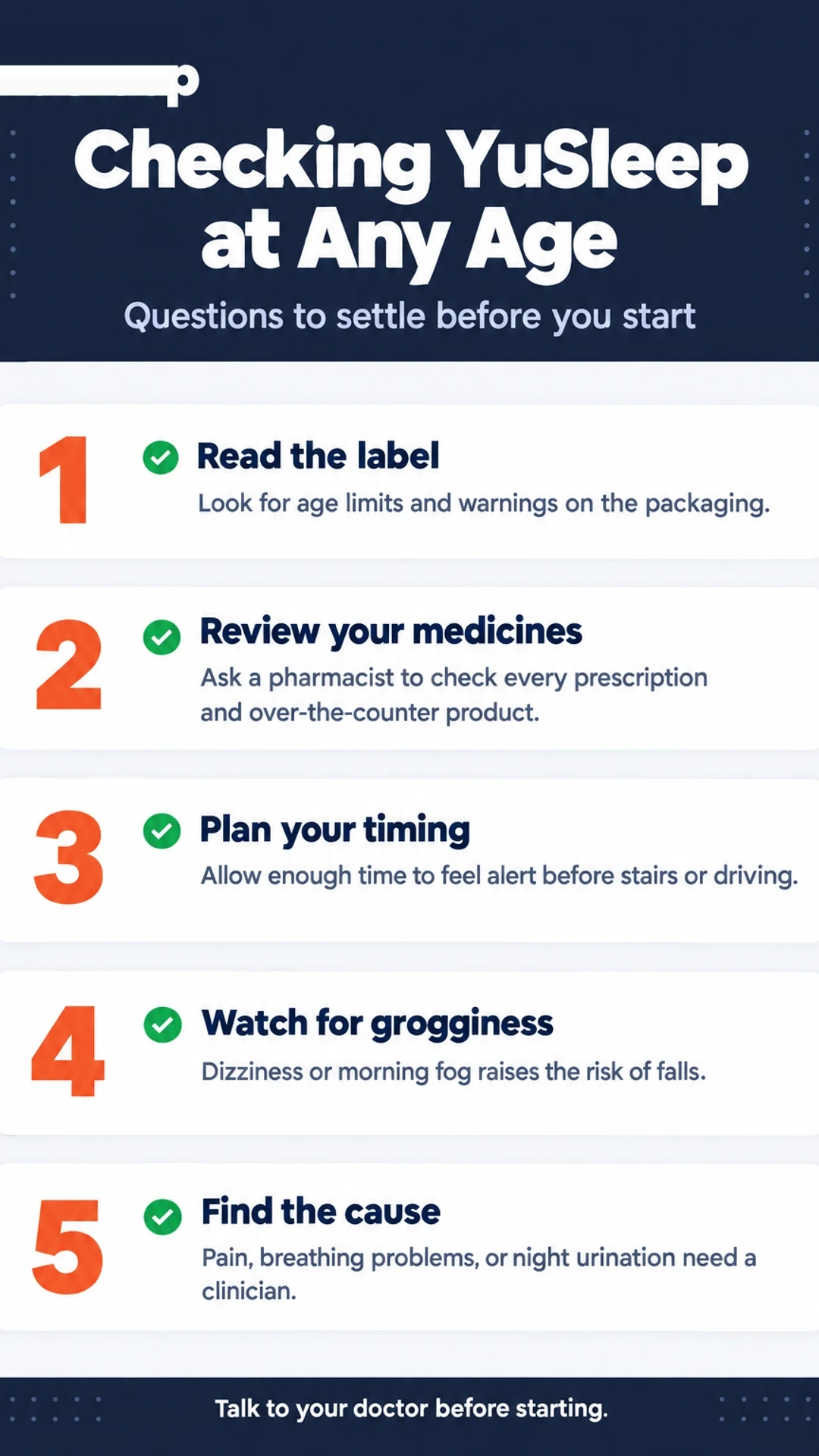
Label age limits and warnings, what the packaging actually states about who should not use it Medication interactions, why your current prescriptions and over-the-counter products matter more than the supplement itself Morning grogginess and falls, how timing and dose affect how you feel when you get up Underlying sleep problems, why nighttime waking, pain, or breathing issues need a clinician's attention Questions to bring to your pharmacist or doctor, a short checklist you can take into the appointment
If you are over 65 and sleeping badly, you probably want a straight answer and a safe way to decide, not a sales pitch. This guide gives you that. We are the editorial team at this site, and this guide is based on published specifications and what buyers report, not our own testing. We have kept the focus on age-related questions and on what to check first, so you can have a more useful conversation with your clinician. Other pages in this hub cover dosing, ingredients, and side effects in more depth, and where those topics matter for your age group we point you to them rather than repeating them here.
What Changes With Age When You Take a Sleep Supplement
Your body handles most supplements through two organs: the liver, which breaks ingredients down, and the kidneys, which clear what is left. Both tend to work a little less efficiently as people get older. This decline is usually gradual rather than sudden, and it varies a lot from person to person. The practical effect is that an ingredient may stay in your system longer than it would in a younger adult, which can change how strong and how long-lasting its effects feel. That is one reason older adults should look closely at dosing rather than assume the amount that suits a younger person is right.
Why does age make sedation feel stronger?
Older adults are often more sensitive to sedating effects. You may notice dizziness when you stand up quickly, or feel groggy the next morning even after a dose that caused no trouble years ago. Both are worth taking seriously, because unsteadiness raises the risk of falls. If you wake during the night to use the bathroom, the timing of your dose matters more than it used to.
Is poor sleep the same at 70 as it is at 35?
Not usually. Sleep naturally shifts later in life. Many older adults wake earlier, sleep in lighter stages, and wake more often during the night. Changes in light exposure, medication use, pain, and bladder habits can also play a part. Because the cause may differ, a product that helps a younger person fall asleep may not address what keeps you up. A check-in with your doctor can help you work out what is actually going on before you add anything new.
Before you start, look at the label for ingredients and any age guidance, and ask your doctor or pharmacist to review your full list of medicines.
Medication Interactions to Check Before Using YuSleep
Older adults are more likely to take several medicines at once, and that is where most of the risk with any sleep aid sits. This section is built around questions to bring to a doctor or pharmacist, not a list of verdicts. What follows is based on published specifications and what buyers report.
Could this add to my drowsiness?
Sedatives, sleep medicines and anti-anxiety drugs can all make you feel heavy-headed, and combining them with a sleep aid can make that worse. Ask:
- Do any of my current prescriptions cause drowsiness or slow my reactions?
- Could taking a sleep aid alongside them increase my chance of a fall during the night?
- If I wake up to use the bathroom, how long will it take me to feel fully alert again?
Am I on a blood thinner?
If you take a blood thinner, any new supplement should be reviewed by a doctor or pharmacist before you start it. Some ingredients can change how these medicines behave, so ask directly whether the full product is safe with your specific medication and dose.
Do my blood pressure medicines or antidepressants interact?
Blood pressure medicines and antidepressants are two categories where interactions should be checked before starting any sleep aid. Ask whether the product could affect your blood pressure, heart rhythm or mood, and whether you need any spacing between doses.
What should the pharmacist check?
Bring the full YuSleep ingredient list and your complete medicine list, including over-the-counter products, vitamins and anything you take only occasionally. Ask the pharmacist to compare them line by line. This is one of the quickest ways to catch a problem.
Fall Risk, Nighttime Trips and Grogginess
Older adults are the group most likely to feel the effects of a sleep aid the next morning, and the main concern is balance rather than sleep quality. Some people wake up still heavy-headed, slower to react, or unsteady on their feet. That matters most on stairs, when reaching for a bathroom door in the dark, or when getting behind the wheel.
Timing is where most of the risk can be managed. Ask yourself these questions before you decide when to take anything:
- How many minutes do you need between taking a supplement and getting up for the day?
- Do you get up during the night to use the bathroom, and how soon after falling asleep does that usually happen?
- Will you need to drive, climb stairs or make an early call the morning after?
If you are often up during the night, a product taken late may leave you least steady at exactly the moment you are walking through a dark house. Discuss timing with your doctor, especially if you take other medicines that also cause drowsiness. Your doctor can also advise whether a supplement that contains melatonin or magnesium is appropriate for you at all.
Simple changes help a lot. Keep a clear, unobstructed path to the bathroom, and fit night lights along it so you are not relying on overhead lights that wake you fully. A dim light is easier on balance than a sudden bright one. Sedation and a dark room together raise the chance of a fall, so treat the walk to the bathroom as the moment to take care, not an afterthought.
Common Sleep Problems in Older Adults and What a Supplement Can and Cannot Do
Sleep often changes with age. Many older adults wake earlier than they used to, sleep more lightly, and get up at night to urinate. These patterns are common, but common does not mean harmless or unexplained. Frequent night waking, for example, can come from an overactive bladder, a prostate condition, or heart and kidney issues, so it is worth raising with your doctor rather than assuming it is just part of getting older.
Other causes deserve a medical evaluation too:
- Chronic pain, from arthritis or back problems, that worsens when you lie down
- Sleep apnea, where breathing repeatedly pauses or becomes shallow during the night, often noticed by a partner through loud snoring or gasping
- Restless legs, an urge to move the legs that tends to strike in the evening or at rest
- Side effects from medicines, including some blood pressure drugs, antidepressants, and decongestants
A supplement such as YuSleep is unlikely to fix these underlying causes. Product labels and vendor claims describe general sleep support, not treatment for apnea, pain or medication effects, and we have not verified any claim of that kind. If you have tried a product for a few weeks and your sleep is unchanged or getting worse, that is a clear signal to book an appointment rather than to increase the dose. Bring a written note of your bedtimes, waking times, and how rested you feel, since that record helps your doctor sort out what is going on.
Common causes of poor sleep in older adults
| Cause | Typical sign | Next step |
|---|---|---|
| Chronic pain | Worsens when lying down | Raise with your doctor |
| Sleep apnea | Loud snoring or gasping, noticed by a partner | Medical evaluation |
| Restless legs | Urge to move legs in the evening or at rest | Raise with your doctor |
| Frequent night urination | Waking to use the bathroom | Check for bladder or prostate issues |
| Medicine side effects | Sleep changes after starting a new drug | Review with pharmacist |
Warning Signs and When to Stop
Older adults are often more sensitive to sedating ingredients, so it helps to know in advance what to watch for.
Stop and contact a doctor straight away if you notice:
- Confusion, disorientation or memory gaps, especially in the morning
- Unusual behaviour, such as wandering, agitation or acting out of character
- Any fall, or near-fall, during the night or on waking
- Severe dizziness, fainting or trouble standing up
- Signs of an allergic reaction, such as rash, swelling of the face or lips, or difficulty breathing. These need emergency care, not a wait-and-see approach.
Report new symptoms, not just the ones named on the label. Labels list the effects a manufacturer chose to name. In the days after you start, tell your doctor about anything new or unexpected, even if it seems minor.
Do not combine it with alcohol or other sedatives without medical advice. Alcohol, prescription sleep medicines and some antihistamine sleep aids add to drowsiness, which raises the risk of falls. Ask your doctor or pharmacist before taking any of them alongside a sleep product.
Keep a short note of when you take it, how you sleep and how you feel on waking. It makes that conversation with a doctor far more useful.
A Pre-Purchase and Pre-Use Checklist for Older Adults and Caregivers
If you are buying YuSleep for someone over a typical adult range, or for yourself, the safest approach is to work through a short checklist before the first dose. Nothing here requires a medical background. It is about gathering the right information and putting a few checkpoints in place.
What should I check on the label first?
Start with the packaging, not the website. Look for any stated age limits, warnings, and the full list of ingredients with amounts. Then compare what the label says with the vendor's marketing claims. If the site promises that a product helps you "rested" wake-ups or deeper sleep, but the label is vague about what it contains, treat that gap as a reason to ask questions before buying.
How do I involve a pharmacist or doctor?
Bring the product and a written list of every current medicine, supplement, and over-the-counter sleep aid to a pharmacist or doctor before the first dose. Ask specifically about interactions and about any health conditions that matter for sleep, especially heart, kidney, liver, and breathing issues. A pharmacist can often answer this in a few minutes without an appointment.
Who sets the starting dose and review date?
Agree on a starting dose and a review date with a clinician. Ask them to name the dose, the time to take it relative to bed, and when you will next talk about how things are going. Then keep a simple diary. Note the time you took it, the time you got into bed, roughly how long it took to fall asleep, any waking during the night, how you felt on waking, and any new symptoms such as dizziness or unsteadiness on getting up. A few lines each morning is enough.
What should I check before paying?
Read the refund policy and return conditions before you buy. Look for the time window, whether opened packs can be returned, and who pays postage. Write down the date you start taking YuSleep, so that if you need to stop, you know exactly where you stand with the vendor and can raise it with your doctor.
For how dosing and timing work in practice, see our guide on how to take YuSleep.
What to check before the first dose
| Check | Why it matters | Who to ask |
|---|---|---|
| Label age limits and warnings | Packaging states who should not use it | Pharmacist or doctor |
| Full ingredient list with amounts | Compare against your current medicines | Pharmacist |
| Current prescriptions and over-the-counter products | Sedatives and other drugs can add to drowsiness | Pharmacist or doctor |
| Refund and return conditions | Lets you stop if it does not suit you | Vendor, read before buying |
Frequently asked questions
What is a good sleep aid for older people?
For many older adults, the first step is behavioral: a regular wake time, morning daylight, limiting caffeine after noon, and a cool, dark bedroom. If a product is considered, a doctor or pharmacist should review it first, since older bodies clear many ingredients more slowly and some sleep aids raise fall risk. Check the label for dosing guidance and ingredients that may interact with current medicines.
What are some reasons why I can't stay asleep at night?
Common causes include needing to urinate during the night, pain or restless legs, sleep apnea, and medications such as some blood pressure drugs or antidepressants. Changes in circadian timing also shift wake-ups earlier with age, so waking at 4 or 5 a.m. is common. Alcohol and late large meals can fragment sleep. A doctor can help sort out which of these applies.
What is the most powerful supplement for sleep?
No supplement works the same way for everyone, and there is no single strongest option. Melatonin is widely used and is usually taken in small doses a short time before bed, but effects vary. Magnesium, valerian and other ingredients have mixed evidence. Strength depends on the person, the dose and existing medicines, so the label and a healthcare provider are better guides than a ranking.
What to do when the elderly won't sleep at night?
Keep the routine calm and predictable: same bedtime, a light dinner, no long naps after mid-afternoon, and dim lights in the evening. Limit fluids for two hours before bed if nighttime bathroom trips are an issue. Avoid stimulating television or arguments late in the day. If sleeplessness lasts more than a few weeks or includes confusion, sudden changes or daytime drowsiness, contact a doctor promptly.
Is YuSleep safe for older adults?
Based on published information, YuSleep should be checked against the label for age guidance before use by anyone over a typical adult range. Older adults often take several medicines, and sedating ingredients can increase dizziness, falls and next-day grogginess. Review the ingredient list, confirm the suggested dose, and ask a pharmacist or doctor about interactions before starting.
Wrapping up
Older adults should look at the label, the ingredient list and their current medicines before trying any sleep product. Many nighttime waking problems have fixable causes, so start with routine and a medical check. If sleep trouble persists, a doctor is the right next step, not a bigger dose. What has worked for you or a family member? Share it in the comments.